LiKee Pull String Teething Toys Recalled Due to Risk of Serious Injury or Death from Choking; Violate Mandatory Standard for Toys; Sold on Amazon by ChilanTech
Reviewed and published by MPB Safety Desk
Hazard
The recalled teething toys violate the mandatory standard for toys because the silicone strings are smaller and longer than permitted. The strings can reach the back of children's throat and become lodged, posing a serious risk of respiratory distress and deadly choking hazard.
What parents need to know
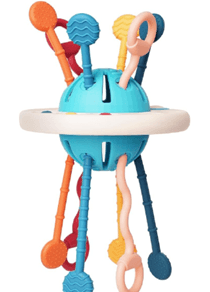
This recall involves LiKee Pull String teething toys. These toys feature an off-white disc with a blue center ball and six multi-colored silicone pull strings.
The teething toys have been recalled because the silicone strings are smaller and longer than permitted by safety standards. This design poses a risk of the strings becoming lodged in a child's throat, which can lead to respiratory distress and a serious choking hazard. The firm has received ten reports of the toys' strings reaching the back of a child's throat, resulting in respiratory distress or choking.
If you have this teething toy, please stop using it immediately and remove it from your child's reach. You should check the official recall notice for detailed instructions on how to receive a replacement.
Recall details
From the official U.S. Consumer Product Safety Commission record
- Recall number
- #26538
- Recall date
- Units affected
- About 24,400
- Remedy
- Consumers should stop using the toy immediately, take it away from children and contact ChilanTech for free replacement toy of at least equal value, including shipping. Consumers will be asked to destroy the toys by cutting the silicone tentacles and writing in permanent marker "Recalled" on the toys' main body and send a photo of the destroyed product to likee-teether-recall@outlook.com. Consumers should then dispose of the destroyed product.
- Product description
This recall involves LiKee Pull String teething toys. The teething toys consist of an off-white disc shape with a blue ball in the center and six multi-colored, silicone tentacle-looking pull strings that run through the ball. The disc has three soft push buttons. The brand name and "Baby Sensory Toy" are printed on the front of the product packaging and "Model No. LK-FDWJ" on the back.
- Products and models
- LiKee Pull String Teething Toys
- Sold at
- Amazon.com from November 2024 through December 2025 for about $10.
- Consumer contact
- ChilanTech by email at likee-teether-recall@outlook.com.
Recall details are summarized from official government sources and reviewed by our editors before publishing. Information can change after publication. Always confirm the current status, affected models, and remedy instructions in the official U.S. Consumer Product Safety Commission notice before acting.
Own another LiKee?Add it to Recall Watch and we compare every new recall we publish with your list.
Our Safety Desk posts selected child product recalls on X. Follow @myparentingbook